our story
Why form an alliance?
Despite significant efforts by both the voluntary and statutory sectors to address key issues in our communities, conditions in many areas are worsening due to economic, socio-demographic, and environmental pressures, highlighting the urgent need for a new approach.
Radical change is essential. Creating opportunities for organisations and communities to shape their own interventions, take control of the agenda, and develop effective, measurable solutions is critical.
However, meaningful change is complex and cannot be achieved by any single funder or organisation.
Across the UK, there is a growing movement among forward-thinking organisations to move away from operating in isolation with limited co-ordination, and instead collaborate together to tackle deep-rooted, systemic issues.
By adopting a fresh approach, we want to create the conditions to improve the lives of our communities.
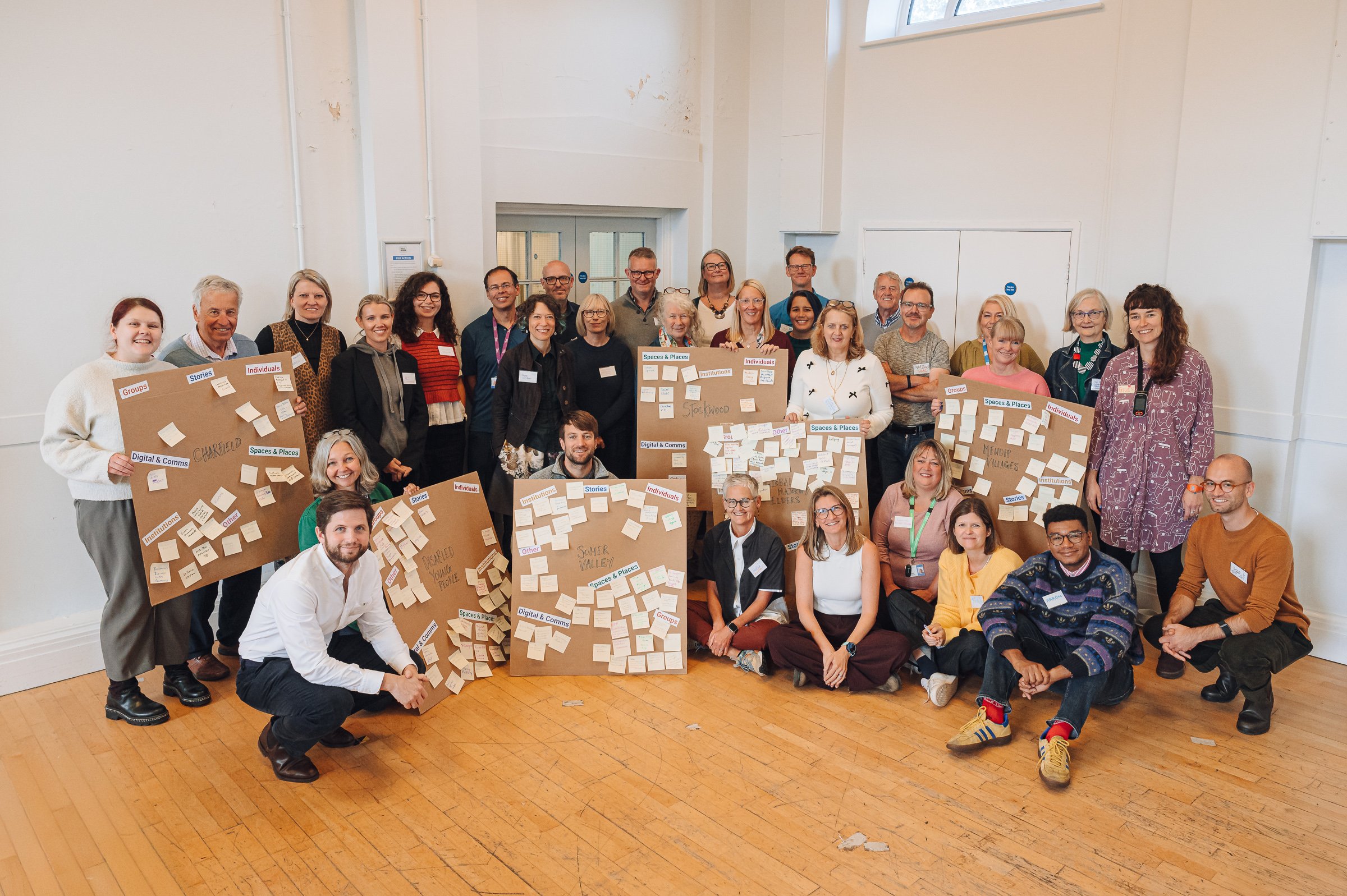
Throughout 2024, St Monica Trust (SMT) invited a range of people and organisations to a series of ‘think tank’ meetings to explore new ways of working.
The response was overwhelmingly positive. There was clear appetite for enabling long-term change through greater collaboration and focused funding, with the goal to better support organisations in achieving sustainability while delivering meaningful change for the communities they serve.
From the outset, there was strong consensus and a shared determination to work collectively.
As the meetings progressed, the ‘Impact Alliance – West of England’ emerged with a commitment to doing things differently.

April 2024 – Understanding loneliness and approaches to reduce loneliness
Members shared their expertise and experiences in addressing loneliness, with contributions from:
Kay Libby, CEO of Age UK Bristol who spoke about the work of the Bristol Ageing Better programme.
Helen Manchester from the University of Bristol on participatory research undertaken to tackle social isolation and loneliness.
Racheal Dutton, St Monica Trust researcher gave an overview of loneliness and isolation, how it’s measured, & best practice from international efforts.
Lizzie Lyons from Business West spoke on the impact of loneliness in the workplace.
Kate Jopling, international expert on the subject, spoke about her research and evaluation into loneliness, particularly the Promising Approaches Framework from the Campaign to End Loneliness.
Key decisions were made by Alliance members to:
build upon and amplify expertise
while innovating where necessary
use the Promising Approaches Framework to provide a unified strategy for addressing loneliness in the West of England, and ensure it would be built on well-evidenced research.
In the beginning…
January 2024
The first meeting sought to prioritise the voices of those accessing or needing support. The four local VCSE infrastructure organisations (VANS, 3SG, CVS South Gloucestershire and Voscur) - representing hundreds of charities and voluntary groups - as well as statutory leaders and key stakeholders from sectors such as education, faith, business, sport, arts and funding, came together to build on existing knowledge and community assets, and discuss how to best work together.
February 2024 – The beginning
Key issues relating to loneliness were explored. Our goal was to begin to understand how, as an Alliance, we could address these challenges in our own communities.
It became clear that, although there was a strong enthusiasm to form the Alliance (with some members eager to begin), it was too early to narrow down specific problems or critical structural arrangements.
Members emphasised the need for more discussion on the Alliance’s goals. This marked a pivotal moment, with Members taking ownership of the Alliance's direction and shaping our future approach.
March 2024 – Aligning behind a vision
Organisations spoke passionately about why they wanted to lead something different and be part of the Impact Alliance. Motivations included:
The “huge potential” the Alliance represents.
The desire to work cohesively and break down silos to achieve greater impact.
Learning from each other and forming alliances across the region.
Addressing the lack of alignment and shared vision across too many isolated projects.
Collaborating to “stop billing the same pound from the same person.”
Unlocking solutions from within communities.
Exploring new ways of funding and operating.
“We don’t like to admit when we haven’t delivered what we said we would do, here we can come with a mindset where if it’s not working, we learn and change”.
This enthusiasm generated momentum to rally behind a vision of what we want to do as an Alliance. Taking 75% of the vote, the IA vision was chosen: ‘Making loneliness a stranger’.
May 2024 – Agreeing an approach
Having unanimously agreed to be guided by the Promising Approaches Framework, this session focussed on understanding each theme within the Framework and
how the Alliance could enable them
what the Alliance can offer
how we help communities build themselves, and
how existing projects and research could align.
It marked a strategic pivot towards using evidence-based research to guide the Alliance's core principles.
June 2024 - Defining the Alliance
Making collective decisions to clarify definition and shape of the programme, and the parameters within which Members could operate collectively and independently:
Launching the Impact Alliance: defining why we’ve come together, who we are, and what we aim to achieve collaboratively.
Inviting existing projects to align.
Starting with a place-based, targeted approach, in small pilot areas, with evaluation to guide future scaling across the region.
Using an targeted funding approach instead of an open call across whole region.
Employing an experimental, risk-taking ‘test and learn’ approach.
Creating a common evaluation framework that focuses on behavioural change, is light-touch, adopts a cohort approach, and embeds reflective practice and continuous learning.
Uniting behind a shared identity and brand, while maintaining individual organisational identities.
Using our collective voice to influence strategic thinkers.
July 2024 - Place-based approach and collective working
This session focused on questions related to our place-based approach, the impact we aim to achieve, and how we can effectively deliver funding into identified areas.
Bristol City Council’s Strategic Intelligence and Performance team offered to produce data for the West of England to inform our place-based identification work, using Age UK’s risk of loneliness heat maps and the established indicators.
Alliance members also came forward with ‘Member Contributions,’ including offers of funding, intergenerational toolkits, research and data, connection to third sector organisations, event space, coworking space, IT support, equipment, communications/digital skills development, professional training, marketing, church networking, develop & implement EDI practices, strategic planning, income generation, governance support and development, people/capacity to support the Alliance, feeding successful outcomes to local ICB and Council.
Drafting of the Terms of Reference began, providing formal structure to the Alliance’s work.
This progress enabled a more structured format for future sessions, with sub-groups formed according to expertise.
August & September 2024 – Deepening strategy
As the Alliance moved closer to the delivery phase, these sessions delved deeper into each work package. Discussions centred on system-level approaches, how to apply pressure for systemic change, working effectively with community anchor organisations, our approach for evaluation, and preparing for the Alliance’s launch.
October 2024 – Exploring our operating model
The Alliance doubled down its efforts on defining our operating model between the Impact Alliance, delivery organisations who will run the particular projects and anchor organisations who have the embedded networks to develop and support local delivery partners in their endeavours. Alliance members were challenged to identify the characteristics, responsibilities, motivators and barriers for each group, bringing greater clarity and insight for the operating model design.
It was also determined that anchor organisations should go under another terminology, potentially ‘enabling organisations’ as this avoids confusion with existing structures and allows our approach to be more experimental, seeking diversity in the type of organisation who is best placed to play this enabling role.
November 2024 – Place-based operations and launch prep
This was a working session focused on pilot locations, creating a manifesto and exploring an operating model. By the end of the session, we had collectively contributed ideas, sentiments and wording for our manifesto. The session also focused on collating intelligence regarding the shortlisted pilot communities identified to date, to aid refinement and a final decision. Progress was also made on how to make the proposed operating model a reality.
Launch event – 03 December 2024
We marked the official launch of the Impact Alliance on 03 December 2024 at the venue of Impact Alliance member Bristol Beacon. The hall was standing room only. Starting with a video of our manifesto and an opening address by Jonathan Dimbleby, the event included SMT CEO David Williams explaining the need for starting the Impact Alliance, a panel discussion, and a keynote address by international expert on loneliness, Kate Jopling.

2025 - From planning to doing!
2025 saw meetings shift from our more ‘workshop style’ exploratory sessions in 2024, to a more structured, agenda-driven format - a shift from ‘planning’ into ‘doing’.
Key actions in 2025 included:
Deploying teams in our Pilot Communities to identify promising projects and formalise our Enabler network
Growing funds and determining how these will be distributed
Co-producing the Impact Alliance Best Practice Criteria, and identifying programmes to scale best practice across the West of England
Recruiting a programme manager, hosted by IA Member Age UK Bristol, to drive forward the Alliance’s work
Recruiting a Research Fellow, hosted by the University of Bristol, to shape and deliver our goals to be a learning-led organisation, understand the impact of our work, and share learnings with others.
A collaborative approach built on generous leadership and shared goals
Impact Alliance Members agreed and united behind shared goals to address the most pressing challenges in our communities:
Delivering greater impact
Aligning behind a common vision
Breaking down silos through collaboration
Working strategically
Learning from each other and our communities to create opportunities for change
Taking risks, adapting, and refocusing where necessary
Seeking innovative models and solutions for end users
Generating long-term, sustainable funding